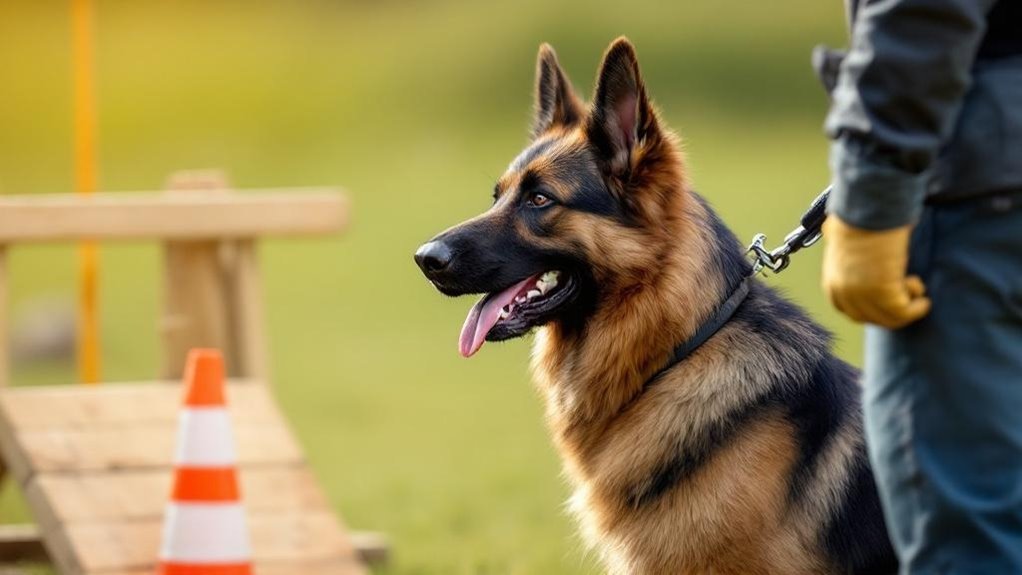
Schutzhund training develops your dog’s tracking, obedience, and protection skills through structured, consistent practice rather than aggression. You’ll need several hours weekly, significant financial investment for equipment and club fees, and genuine commitment to learning dog behavior alongside your handler skills. Success typically requires three years of progression, so finding the right club with mentors whose methods align with your values becomes essential. Understanding these fundamentals helps you build the foundation for advancing through each discipline.
- Key Takeaways
- What Is Schutzhund Training and Why Does It Matter?
- What You’ll Learn: Tracking, Obedience, and Protection
- What Schutzhund Training Actually Costs (Time, Money, Lifestyle)
- Finding a Schutzhund Club That Aligns With Your Goals
- Picking a Mentor Who Fits Your Training Style
- What Equipment You’ll Need Before Your First Day
- How to Evaluate a Dog for Schutzhund Work
- Your Dog’s First Commands: Markers and Foundation Exercises
- Socialization Without Overwhelming Your Puppy
- Why Play Builds Better Bite Drive and Engagement
- What Happens During Protection Training
- Common Beginner Mistakes and How to Avoid Them
- Schutzhund Tracking Basics for New Handlers
- Measuring Progress: What Success Looks Like
- Engaging in Local Clubs and Online Communities
- Frequently Asked Questions
- Conclusion
Key Takeaways
- Schutzhund develops three core disciplines: tracking, obedience, and protection work, building endurance, trainability, and courage.
- Start with foundational obedience commands to ensure consistent responses before progressing to complex protection tasks.
- Select a reputable club aligned with your goals; attend introductory classes to evaluate trainers and culture.
- Assess your dog’s play drive, confidence, and work motivation through interaction before beginning formal training.
- Expect significant time commitment—several hours weekly—plus ongoing costs for equipment, memberships, and seminars over three years.
What Is Schutzhund Training and Why Does It Matter?
A thorough sport rather than a casual training method, Schutzhund challenges dogs and handlers across three interconnected disciplines: tracking, obedience, and protection work.
You’ll discover that Schutzhund training develops essential canine traits—endurance, trainability, mental stability, courage, and work drive—while simultaneously strengthening your bond with your dog.
Schutzhund training cultivates endurance, trainability, mental stability, courage, and work drive while forging an unbreakable bond between handler and dog.
Protection training, a key component, teaches your dog controlled responses in specific situations, demonstrating that the sport isn’t about aggression but structured capability.
Originally designed for German Shepherds, Schutzhund now welcomes various breeds, making it accessible to dedicated handlers.
The consistency required means you’re investing in your dog’s psychological development and your own understanding of canine behavior, creating a partnership built on mutual respect and clear communication.
What You’ll Learn: Tracking, Obedience, and Protection
You’ll develop three core skills through Schutzhund training: tracking, which sharpens your dog’s ability to follow scent trails across different terrains while building stamina and focus;
obedience, which establishes the foundation for all other work by ensuring your dog responds consistently to commands before advancing to complex tasks;
and protection, which combines physical capability with strict adherence to your handler cues, demonstrating how obedience directly supports protective responses.
Tracking Fundamentals and Scent Work
Tracking fundamentals form the foundation of Schutzhund training, developing your dog’s natural scenting ability while building the focus and obedience that competition and real-world work demand.
You’ll start with tracking articles—small objects scented by handlers—placed along designated paths, which makes much easier progression as your dog learns to distinguish specific scents from environmental distractions. Consistent practice across varied terrains and weather conditions strengthens your dog’s confidence and physical endurance, while obedience commands keep them attentive to your guidance throughout the work.
Environmental factors like wind direction, temperature, and surface type greatly influence scent dispersal, so don’t hesitate to ask questions about how these elements affect your training strategy.
Success emerges through reinforcement and structure, ultimately showcasing the teamwork between you and your dog.
Obedience and Protection Drills
Once your dog’s scenting foundation grows solid through tracking work, you’re ready to layer obedience and protection drills into the training program, since these three components reinforce each other and build toward the full Schutzhund skill set. Obedience commands establish the handler-dog relationship that makes protection work possible, while protection training demands the control you’ve built through obedience practice. The first time you introduce protection drills, make sure the dog responds reliably to sit, down, and heel commands under pressure. Consistency and positive reinforcement are difficult to make happen without structured practice, yet they’re essential for building confidence.
| Command | Purpose | Handler Focus |
|---|---|---|
| Sit | Foundation control | Clear verbal cue |
| Down | Emergency stop | Immediate response |
| Heel | Movement control | Positioning awareness |
| Stay | Distance management | Patience building |
| Recall | Directional response | Reward timing |
What Schutzhund Training Actually Costs (Time, Money, Lifestyle)
Before you commit to Schutzhund training, it’s important to understand that this discipline demands more than just showing up to a few lessons—it requires a sustained investment of time, money, and lifestyle changes that’ll reshape how you spend your weeks and years.
You’ll need to go to training sessions several hours weekly, show the dog consistency through repetition, and often go back to foundational exercises when progress plateaus. Equipment costs range from hundreds to thousands of dollars, while club memberships and seminars add ongoing expenses.
The three-year progression demands mental commitment too, requiring you to learn dog behavior and refine handler skills for effective partnership, alongside competition travel and time away from home.
Finding a Schutzhund Club That Aligns With Your Goals
You’ll want to research local Schutzhund clubs carefully, since your choice will shape your training experience for the next 2-3 years and directly influence how well you and your dog develop in tracking, obedience, and protection work.
Before committing to a club, attend an introductory class or event to observe the trainers’ methods, assess whether their philosophy matches your goals, and get a sense of the mentorship culture they’ve built.
Finding the right fit means selecting a club where experienced handlers can guide you consistently, where the training approach aligns with what you’re trying to achieve, and where the overall environment supports both your learning and your dog’s progress.
Research Local Club Options
How do you find a Schutzhund club that’ll actually support your training goals rather than frustrate them? Start by researching local options and observing their training sessions firsthand.
Watch how trainers interact with beginners, noting whether they provide clear explanations of their methods and philosophies. Talk to current members about their experiences, paying attention to club culture and whether members feel supported.
Consider the club’s track record with beginners specifically, since mentorship quality directly impacts your confidence and skill development. Remember that Schutzhund training requires a 2-3 year commitment, so choosing a club aligned with your learning style matters greatly.
Visit multiple clubs before deciding, allowing you to compare their approaches and community dynamics thoroughly.
Align Training Philosophy And Goals
Since your training philosophy and the club’s approach will shape your entire Schutzhund journey, finding alignment between them isn’t optional—it’s foundational to your success.
You’ll want to identify clubs that share your values about dog welfare, training methods, and progression timelines. Some clubs emphasize positive reinforcement exclusively, while others integrate corrections into their structure, so understanding these differences matters before you commit.
Visit potential clubs during training sessions, observe how handlers interact with their dogs, and ask questions about their methodology. Pay attention to whether instructors explain the reasoning behind techniques and whether they adapt approaches to individual dogs’ needs.
This compatibility directly influences your motivation, your dog’s response, and your long-term progression through the sport’s demanding three-year program.
Evaluate Mentor Selection And Culture
Finding the right mentor and understanding club culture matters as much as the training philosophy itself, because your day-to-day experience will ultimately shape whether you stick with Schutzhund or burn out before completing the program.
Seek a mentor whose training style and goals align with yours, since consistent guidance builds both confidence and technical skills. Visit club activities before committing, observing how handlers interact with each other and their dogs.
A supportive atmosphere where members respect one another creates the foundation for effective learning. Pay attention to whether experienced trainers offer genuine feedback and encouragement rather than criticism.
This environment of mutual respect directly influences your progress, making mentor selection and club culture essential factors in your long-term success within the Schutzhund community.
Picking a Mentor Who Fits Your Training Style
Why you choose a particular mentor matters far more than simply finding someone with impressive credentials, because the right mentor will match your training philosophy, reinforce your goals, and help you develop as a handler in ways that feel natural and sustainable.
Look for someone whose approach to dog training aligns with how you want to work, whether that means emphasizing patience during obedience training, specialized tracking techniques, or protection work.
Find a mentor whose training philosophy matches your desired approach, whether obedience, tracking, or protection work.
Observe how potential mentors interact with their dogs and handlers, noting whether they demonstrate respect, resilience, and genuine collaboration.
Ask about their experience in the specific areas you want to develop.
Schedule conversations about your training objectives before committing, ensuring their guidance will directly support your progression and keep you motivated throughout your journey.
What Equipment You’ll Need Before Your First Day
Once you’ve found a mentor whose approach aligns with yours, you’ll need to gather the right equipment so you can start your training with confidence and structure.
Begin with a high-quality nylon or leather collar, which provides essential safety and control during training sessions. A comfortable harness or vest improves your handling capability across various activities, ensuring better communication with your dog.
You’ll also want dog tugs and bite pillows to develop drive and retrieve skills through focused, playful exercises. For tracking work, acquire tracking articles, bait bags, and flags to practice scent detection effectively.
Finally, invest in bite sleeves and suits to protect yourself during bite work, safeguarding both you and your dog throughout training.
How to Evaluate a Dog for Schutzhund Work
Selecting the right dog for Schutzhund work requires a thoughtful assessment of multiple factors, since not every dog possesses the physical and mental qualities necessary for this demanding sport.
You’ll want to evaluate breed characteristics first, as German Shepherds, Malinois, and Rottweilers typically excel due to their natural drive and temperament.
Next, examine physical attributes like strength, agility, and stamina, which determine whether your dog can handle tracking, obedience, and protection training demands.
Observe their temperament closely for confidence, stability, and work motivation, since these traits predict success.
Gauge play drive through interaction, as higher motivation correlates with better training outcomes.
Finally, consider age and health status, ensuring your dog’s mental development allows them to process complex training challenges ahead.
Your Dog’s First Commands: Markers and Foundation Exercises
Before your dog can learn complex Schutzhund exercises, you’ll need to establish a clear communication system through markers and foundation work that builds their understanding of what you’re asking.
Start by introducing a verbal marker like “Chip,” which signals that a reward’s coming, helping your dog connect specific behaviors with positive outcomes. Use luring techniques with treats or toys to guide your dog into desired positions, demonstrating what you want rather than forcing compliance.
Use a verbal marker like “Chip” to signal rewards, helping your dog connect behaviors with positive outcomes through luring techniques.
Here’s what matters most:
- Wait until behaviors occur reliably about 99% of the time before adding official commands
- Practice foundational exercises in comfortable settings before advancing to challenging environments
- Keep training sessions interactive and playful to maintain your dog’s enthusiasm and engagement
This structured approach builds confidence and understanding gradually.
Socialization Without Overwhelming Your Puppy
You’ll build your puppy’s confidence most effectively through gradual exposure to new environments, people, and objects presented in short, manageable sessions that match your puppy’s comfort level rather than overwhelming their senses.
During these controlled introductions, you’ll watch your puppy’s reactions carefully, using positive reinforcement like praise and treats to reward calm behavior while avoiding any reinforcement of fearful responses, which teaches your puppy to trust new situations instead of fearing them.
This structured approach to socialization develops your puppy’s ability to remain composed and ignore distractions, laying the foundation for the focus and confidence required in advanced Schutzhund training.
Gradual Exposure Techniques
As your puppy develops during the critical early months, introducing new environments, people, and objects in a controlled manner builds confidence and prevents fear-based reactions that can persist into adulthood.
You’ll want to structure each exposure strategically, moving from familiar settings to progressively challenging situations as your puppy demonstrates comfort and readiness.
Consider these foundational techniques:
- Start in low-stress, controlled spaces where your puppy can acclimate without sensory overload before advancing to busier environments.
- Use treats and praise immediately when your puppy engages positively with new stimuli, reinforcing their willingness to explore.
- Monitor body language closely—watch for tension, hesitation, or withdrawal signals that indicate you’ve moved too quickly.
Consistency matters greatly.
Regular, brief socialization sessions embedded into your training routine create steady progress, allowing your puppy to develop genuine confidence rather than learned avoidance patterns.
Building Confidence Safely
The gradual exposure techniques you’ve been practicing form the foundation for what comes next: building genuine confidence in your puppy by managing the pace and intensity of each new experience. You’ll reward calm behavior consistently, since reinforcing fearful reactions actually strengthens anxiety rather than reducing it. Let your puppy control the speed of progression, starting in quieter settings before advancing to busier environments.
| Experience Level | Environment Type | Duration | Reward Strategy |
|---|---|---|---|
| Beginner | Quiet home spaces | 5-10 minutes | Treats for relaxation |
| Intermediate | Familiar outdoor areas | 10-15 minutes | Praise during calm moments |
| Advanced | New public locations | 15-20 minutes | High-value treats for confidence |
| Expert | Multiple stimuli combined | 20+ minutes | Varied rewards for sustained calm |
This structure guarantees your puppy develops resilience through positive association rather than forced exposure.
Why Play Builds Better Bite Drive and Engagement
When you incorporate play into your Schutzhund training program, you’re tapping into your dog’s natural instincts and creating enthusiasm that transfers directly to bite work, making the dog more willing and excited to engage in protection training.
Play creates positive associations with training activities, which directly strengthens your dog’s motivation. You’ll notice your dog responds with greater enthusiasm when toys and games connect to bite scenarios, building confidence through enjoyable practice.
This playful approach reinforces desired behaviors and deepens the handler-dog bond.
Consider these key benefits:
- Games that simulate bite scenarios help dogs practice skills in a rewarding environment
- Toys linked to training foster consistent desire to engage in bite work
- Positive play experiences build trust, improving collaboration during protection work
This foundation guarantees your dog approaches training with genuine excitement rather than reluctance.
What Happens During Protection Training
Once your dog’s foundation in play-based bite work is solid, you’ll move into protection training, where the focus shifts to teaching your dog to display courage, strength, and agility while maintaining strict obedience to your commands during high-stress scenarios.
You’ll introduce “capping,” a technique that teaches your dog to manage drive and act only on command, which strengthens self-control and teamwork. During sessions, you’ll demonstrate protective exercises while delivering gentle corrections that build confidence rather than fear.
Your role as handler requires constant communication and control, since obedience forms the foundation for reliable protection work.
Practical repetition with consistent reinforcement helps your dog distinguish between appropriate and inappropriate responses, ensuring they respond correctly when protection’s genuinely needed.
Common Beginner Mistakes and How to Avoid Them
Many handlers rush into protection training before their dogs have mastered foundational obedience, and this gap in preparation creates problems that compound quickly during high-stress scenarios.
You’ll find that skipping basic skills leads to communication breakdowns when you need clarity most.
Key mistakes you should avoid:
- Introducing commands before your dog executes behaviors reliably 99% of the time, causing confusion and inconsistent responses
- Overlooking your dog’s emotional state, which directly impacts engagement and learning capacity during sessions
- Progressing to complex tasks without solidifying fundamentals, frustrating both you and your dog
Instead, prioritize building strong foundational obedience early, read your dog’s motivation level throughout training, and resist advancing until basics are rock-solid.
Rely on positive reinforcement rather than corrections to maintain confidence and trust. This structured approach prevents costly setbacks later.
Schutzhund Tracking Basics for New Handlers
How you introduce tracking to your dog will shape their entire foundation in this discipline, so it’s worth understanding what you’re building from the start.
Begin in controlled environments with familiar scents, allowing your dog to develop confidence before you move to complex trails in varied locations. Use tracking articles—personal items you’ve handled—so your dog associates specific scents with rewards, which reinforces their natural tracking drive.
Consistency matters tremendously here; dogs thrive on repetition and positive reinforcement, so schedule regular sessions to build their endurance and strengthen learned behaviors.
As your dog progresses, gradually increase difficulty by adding distractions, varying terrains, and lengthening trails. This structured progression challenges their abilities while maintaining their motivation and skill development.
Measuring Progress: What Success Looks Like
You’ll recognize behavioral milestones when your dog demonstrates increased reliability in executing commands and tracking tasks, which signals that both you and your canine partner are building the foundation needed for advanced work.
As you progress through training, you’ll notice your own development alongside your dog’s—your timing improves, your handling becomes more efficient, and your ability to read your dog’s signals strengthens, creating a partnership where communication flows more naturally.
These dual advances in handler and canine development aren’t separate achievements but interconnected improvements that reinforce each other, so tracking both your dog’s consistency and your own technical growth gives you a clearer picture of where you’re actually succeeding and where you need adjustment.
Behavioral Milestones And Achievements
Because Schutzhund training builds progressively over months and years, recognizing specific behavioral milestones helps you understand whether your dog’s development is on track and where adjustments might be needed.
You’ll notice your dog’s growth through several key indicators that demonstrate readiness for advanced work:
- Strong engagement and enthusiasm during training sessions, showing your dog views work as rewarding rather than obligatory
- Calm attentiveness amidst distractions, proving your dog maintains focus despite environmental interference
- Consistent command performance with high reliability before introducing verbal cues, establishing solid foundation work
As your dog progresses, you’re building a partnership where obedience, scent work, and protection training become interconnected.
Track these behavioral shifts carefully, since they reveal your dog’s mental stability and confidence. When you see sustained improvements across multiple areas, you’re ready to advance to the next training phase.
Handler And Canine Development
As your dog progresses through Schutzhund training, your own development as a handler becomes just as important as your dog’s advancement, since the partnership between you and your canine directly influences every outcome you’ll achieve together.
Your success depends on establishing clear communication through consistent commands, deliberate body language, and reliable reinforcement patterns that your dog can predict and understand.
You’ll notice real progress when your dog responds reliably without hesitation across different environments, tracking accurately, obeying promptly, and displaying controlled courage during protection work.
This consistency reflects your ability to implement structured training techniques repeatedly, adjusting methods based on your dog’s responses rather than circumstances.
Strong handler development means recognizing that every interaction either strengthens or weakens your bond, making intentional practice and self-awareness essential components of your training journey.
Engaging in Local Clubs and Online Communities
Finding the right training environment starts with researching and joining a local Schutzhund club that fits your schedule, goals, and lifestyle, since committing to a club typically requires a 2-3 year engagement for effective training progression.
You’ll benefit from:
- Club culture alignment: Familiarize yourself with the club’s values and training philosophy to guarantee a positive, supportive environment for you and your dog.
- Mentor selection: Seek out an experienced handler whose training goals and methods match your approach, providing direct guidance for your skill development.
- Community connection: Engage through social media platforms and workshops to share experiences and access ongoing learning opportunities.
Beyond local involvement, you’ll strengthen your foundation by tapping into broader Schutzhund networks.
Resources like ActiveDogs.com provide extensive training gear and technique guidance, while customer support helps you make informed equipment choices that support your progression.
Frequently Asked Questions
What Is the 7 7 7 Rule for Dogs?
You should expose your puppy to seven different people, environments, and experiences by seven weeks old. This critical socialization period helps you develop a confident, well-adjusted dog that’ll handle new situations better throughout its life.
What Is the 3-3-3 Rule for Dog Training?
Ever wondered why your newly adopted dog seems stressed initially? You’ll find that dogs need three days to adjust, three weeks to understand routines, and three months to reveal their true personality and settle completely.
What Are Common Schutzhund Training Mistakes?
You’ll make mistakes if you neglect foundational obedience, rush skill progression, give unclear commands, overemphasize protection work, and ignore your dog’s emotional state during training sessions.
What Are the 5 D’s of Dog Training?
You’ll build your dog’s obedience like constructing a bridge—each pillar essential. The 5 D’s are Duration, Distance, Distraction, Discipline, and Disengagement. You’ll strengthen each systematically, creating unwavering focus and reliable command responses.
Conclusion
You might worry that Schutzhund training demands more than you can give, but you’re building a partnership that transforms both you and your dog. Start small with a reliable mentor, stay consistent with your practice schedule, and trust that progress compounds over time. Your commitment to structure and reinforcement creates a foundation where real advancement happens, making the investment worthwhile.