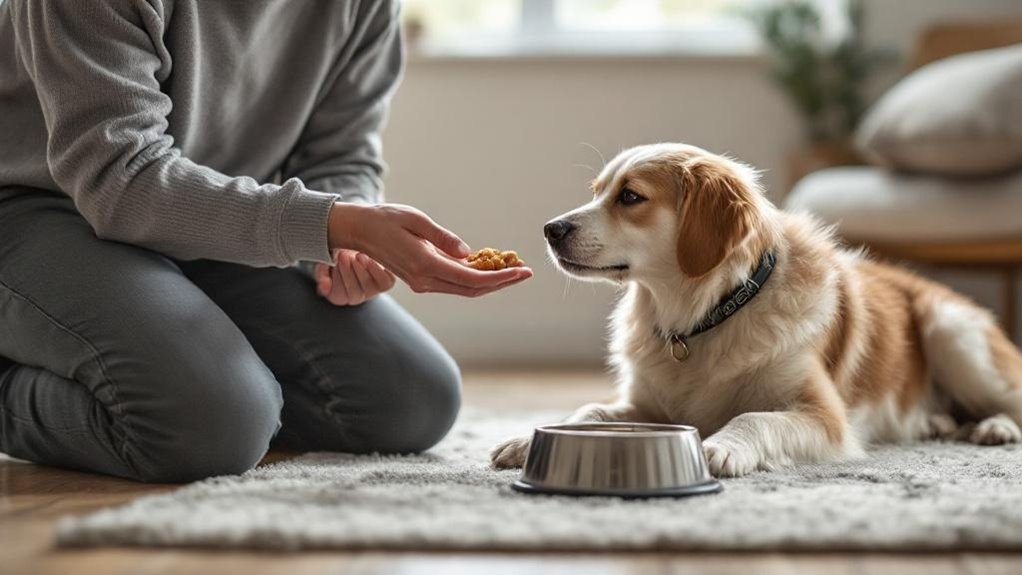
Resource guarding stems from your dog’s survival instinct and anxiety about losing valued items, not from defiance or dominance. You can correct it by building trust through positive reinforcement rather than punishment, which backfires by teaching your dog that humans threaten their possessions. Start by rewarding calm behavior around resources, use trade-up techniques with higher-value treats, and establish consistent feeding schedules to reduce scarcity fears. Understanding growling as communication instead of aggression helps you intervene early and reshape your dog’s perception of your presence around their belongings. Understanding the specific techniques behind these foundational principles will help you design a training plan tailored to your dog’s unique triggers and intensity level.
- Key Takeaways
- What Is Resource Guarding and Why Dogs Do It
- How to Spot Resource Guarding Before It Escalates
- Why Punishment Backfires and Makes Guarding Worse
- Growling Is Your Dog’s Warning System, Not Defiance
- Build Trust With Positive Reinforcement Around Resources
- Master the Drop It Cue: Your Foundation for Progress
- Trade-Ups: Swapping Low-Value Items for High-Value Rewards
- Desensitize Your Dog to Your Presence Near Food
- Stop Object Guarding With the Gradual Approach Method
- Create Safe Distance and Calm Associations Around Resources
- Use Puzzle Toys and Enrichment to Ease Guarding Anxiety
- Establish Scheduled Feeding to Reduce Food Anxiety
- Red Flags That Signal You Need Professional Help
- The Biggest Mistakes Owners Make When Training
- Measure Your Progress: Weekly Benchmarks and Signs of Improvement
- Sustain Long-Term Results: Prevention and Maintenance After Training
- Frequently Asked Questions
- Conclusion
Key Takeaways
- Recognize growling as communication, not defiance, and avoid punishment that reinforces guarding instincts through fear-based responses.
- Build trust using positive reinforcement by rewarding calm behavior around resources and gradually reducing distance during feeding.
- Master the “drop it” cue and trade-up technique, exchanging lower-value items for higher-value treats to motivate willing release.
- Create a secure environment with scheduled feeding, low-value starting items, and enrichment activities to reduce resource anxiety.
- Practice commands daily, document behavioral progress, and seek professional help when aggressive behaviors escalate for consistent improvement.
What Is Resource Guarding and Why Dogs Do It
Because dogs descended from wolves that competed for limited food and shelter, they’ve inherited an instinct to protect things they consider valuable—a behavior called resource guarding. When your dog shows resource guarding, they’re acting on survival instincts, not disobedience, so understanding this distinction helps you respond effectively.
Your dog guards resources when they feel uncertain about accessing them again or when past experiences taught them that people take things away. Environmental stress and anxiety intensify guarding tendencies, making your dog more defensive around food bowls, toys, or sleeping spots.
Dogs guard resources when uncertain about future access or when past experiences taught them people take things away.
You’ll notice resource guarding through growling, stiff body postures, or snapping when you approach valued items. These signals show your dog’s discomfort and desire to maintain possession.
Recognizing these signs early allows you to address the behavior before it escalates, using positive reinforcement techniques that build your dog’s confidence and trust.
How to Spot Resource Guarding Before It Escalates
Now that you understand why dogs guard resources, you’ll want to learn how to spot the warning signs before your dog’s behavior becomes aggressive or dangerous. Your dog exhibits several observable signals that indicate discomfort around possessions, and recognizing these early indicators allows you to intervene before escalation occurs.
| Behavioral Sign | What It Looks Like | What It Means |
|---|---|---|
| Body tension | Stiff posture, raised hackles | Anxiety about resource loss |
| Eating patterns | Rapid consumption, avoiding eye contact | Fear-based guarding response |
| Subtle signals | Lip licking, yawning, shifted gaze | Stress before overt aggression |
You’ll notice your dog rushes to protect belongings when approached or hoards items by blocking access. These patterns reveal possessiveness and discomfort. Understanding this body language helps you address guarding before growling, snapping, or dangerous behaviors develop.
Why Punishment Backfires and Makes Guarding Worse
When you punish your dog for resource guarding—whether you’re yelling, grabbing, or physically correcting—you’re actually teaching them that humans are a threat to their possessions, which strengthens their instinct to guard rather than reduce it.
This fear-based response erodes the trust between you and your dog, making them more anxious and defensive, and it can push them toward alternative aggressive behaviors as they learn that escalation might work better than simple growling.
Instead, you’ll need to recognize growling as valuable communication that gives you a chance to intervene early, since punishing that warning signal only teaches your dog to skip the growl and go straight to a bite.
Fear-Based Responses Escalate Aggression
Though your instinct might be to correct resource guarding through punishment or confrontation, doing so typically backfires by intensifying the very behavior you’re trying to eliminate. When you use punitive measures, your dog interprets them as threats rather than corrections, which reinforces possessive behavior instead of addressing it through effective behavior modification.
| Response Type | What Happens | Result |
|---|---|---|
| Punishment | Dog feels threatened | Increased anxiety and defensive aggression |
| Confrontation | Dog protects resources more fiercely | Guarding behavior strengthens |
| Positive approach | Dog feels safe | Sustainable behavior change |
Fear-based responses create a cycle where your dog’s stress escalates, making them more likely to react aggressively when protecting valued items. Understanding this pattern helps you shift toward consistency and reinforcement strategies that actually work.
Punishment Reinforces Protective Instincts
Because your dog’s growling or guarding behavior stems from anxiety about losing something valuable, punishing that behavior actually teaches them that their instinct to protect is correct.
When you use punishment—whether through scolding, physical correction, or removal of the item—your dog interprets your response as confirmation that people approaching their possessions pose a genuine threat. This reinforces their protective instinct rather than reducing it.
Your dog becomes more guarded, not less, because punishment strengthens the association between “people near my stuff” and “bad things happen.”
Instead of addressing the underlying insecurity driving the behavior, punishment deepens it, creating a cycle where your dog guards more intensely.
Breaking this pattern requires shifting away from punishment entirely.
Trust Erosion Worsens Behavior
Beyond the way punishment reinforces your dog’s protective instincts, it also damages the foundation of trust that allows your dog to feel safe around you. This erosion of trust actually intensifies guarding behavior rather than stopping it. When you use forceful methods, your dog learns that your presence near valued items signals threat, not safety.
This trust erosion creates a cycle where your dog becomes increasingly defensive.
Consider these consequences of damaged trust:
- Your dog views you as unpredictable and potentially dangerous around resources
- Guarding escalates because your dog feels compelled to protect items from you
- Your dog’s anxiety increases, making relaxation around possessions impossible
- Future training becomes harder since your dog no longer trusts your intentions
Rebuilding trust requires consistency, patience, and positive reinforcement that demonstrates your dog’s safety remains intact.
Growling Is Your Dog’s Warning System, Not Defiance
Your dog’s growl isn’t a sign of defiance or dominance—it’s a communication tool that signals discomfort, fear, or a need for space before escalation occurs. Understanding this aspect of dog behavior helps you recognize what your dog is actually telling you, allowing you to respond thoughtfully rather than react with punishment.
When you punish growling, you don’t eliminate the underlying threat your dog feels; instead, you suppress the warning signal itself. Your dog may skip the growl next time and move directly to biting, removing the vital opportunity you need to intervene calmly.
Build Trust With Positive Reinforcement Around Resources
Once you recognize that your dog’s growl is communication rather than defiance, the next step is rebuilding trust through positive reinforcement around the resources that trigger guarding behavior.
You’ll create a secure environment where your dog relaxes near valued items by consistently rewarding calm behavior.
Start with these strategies:
- Begin training with low-value items your dog doesn’t strongly protect, allowing practice without stress
- Exchange resources for higher-value treats, establishing positive associations with sharing possessions
- Use marker words during training to clearly communicate which behaviors earn rewards
- Reward small progress toward relaxed behavior near resources, gradually building your dog’s confidence
This approach diminishes anxiety while strengthening your relationship, transforming resource guarding into an opportunity for connection and understanding between you and your dog.
Master the Drop It Cue: Your Foundation for Progress
You’ll build positive associations around the “drop it” cue by starting with low-value toys your dog doesn’t feel protective of, which removes the pressure and sets you both up for success.
Practice treat trades regularly, where you offer your dog a high-value reward in exchange for whatever they’re holding, teaching them that releasing objects leads to better outcomes rather than loss.
Consistency matters here—use the same cue word, reinforce immediately with praise or treats after they comply, and repeat these sessions until your dog understands that dropping things on command brings good things, not worry.
Building Positive Associations
The foundation of addressing resource guarding rests on teaching your dog that releasing items leads to rewards, not loss, which is why mastering the “drop it” cue becomes your essential first step in this process.
You’ll build positive associations through deliberate dog training practices that reshape how your dog perceives letting go, transforming a potentially anxious moment into an opportunity for reward.
Start with these key strategies:
- Begin with low-value toys your dog doesn’t strongly protect, establishing comfort before advancing
- Exchange less desirable items for high-value treats, making release feel like a favorable trade
- Deliver immediate praise or treats upon successful completion, reinforcing the desired behavior
- Practice consistently, celebrating small successes that gradually build trust around resources
This structured approach decreases anxiety while strengthening your bond through positive reinforcement.
Low-Value Training Practice
Start your “drop it” training with toys your dog doesn’t strongly attach to, since low-value items remove the threat and anxiety that can make learning difficult.
When you use toys your dog finds only mildly interesting, they’ll focus on the training rather than defensiveness, allowing their brain to process the cue without stress. This foundation matters because dogs who feel threatened over possessions rarely learn effectively through pressure or force.
Begin in a quiet space where distractions won’t compete for your dog’s attention, then reward them immediately when they release the toy.
As they consistently succeed with low-value items, you’ll gradually introduce slightly more desirable toys, building their confidence and trust in the process step by step.
Treat Trade Exchanges
Once your dog shows consistent success with low-value toys in quiet settings, you’re ready to move into treat trade exchanges, where you’ll offer something your dog wants even more than the object they’re holding. This progression builds confidence while establishing cooperative behavior patterns.
Effective treat trades require:
- Clear timing: Present the high-value treat immediately after your dog drops the item, creating direct reinforcement
- Consistent rewards: Use treats your dog genuinely prefers, strengthening positive associations with relinquishing resources
- Structured exchanges: Follow the same sequence each time, helping your dog understand expectations and predict outcomes
- Gradual advancement: Slowly introduce slightly higher-value items once your dog demonstrates reliable dropping behavior
This methodical approach transforms resource guarding into collaborative interaction, where your dog learns that releasing items leads to better outcomes.
Trade-Ups: Swapping Low-Value Items for High-Value Rewards
One of the most effective ways to reduce resource guarding is through trade-ups, a technique where you swap something your dog values less for something he values much more, creating an exchange that feels rewarding rather than threatening to him. You’ll start with items your dog readily releases, then gradually progress to more prized possessions as trust develops between you.
| Item Value | Example | Treatment |
|---|---|---|
| Low | Old toys, worn items | Start here first |
| Medium | Partially enjoyed toys | Progress gradually |
| High | Favorite toys, bones | Final stage |
High-value treats like bully bites motivate your dog during exchanges, reinforcing that your presence near his belongings signals rewards instead of loss. Consistent practice desensitizes him to guarding triggers, promoting a relaxed attitude around his possessions over time.
Desensitize Your Dog to Your Presence Near Food
While trade-ups build trust through rewarding exchanges, you’ll now work on desensitizing your dog directly to your presence during feeding, which addresses the core anxiety that triggers guarding behavior in the first place. This process requires patience and structured repetition, creating positive associations between your approach and good things happening.
Desensitizing your dog to your presence during feeding addresses core anxiety, building positive associations through patience and structured repetition.
Start your desensitization work using these steps:
- Remain calm and quiet when moving near your dog’s bowl, minimizing stress signals that intensify anxiety.
- Begin at a comfortable distance, then gradually decrease space as your dog relaxes over multiple sessions.
- Reward calm behavior with high-value treats, reinforcing that your presence means positive outcomes.
- Refill bowls while your dog eats, teaching them your approach brings more food, not threat.
Most dog trainers emphasize that consistency transforms anxiety into security, making regular training sessions essential for lasting progress.
Stop Object Guarding With the Gradual Approach Method
Because dogs guard objects out of anxiety about losing something valuable, you’ll need to rebuild their confidence by slowly introducing yourself into their space without triggering that protective response.
Start with low-value items your dog cares less about, allowing them to adjust to your proximity gradually. Use positive reinforcement—treats and praise—when they remain calm as you approach, creating a positive association with your presence near their belongings.
Implement trade games where you exchange less desirable items for more valuable ones, encouraging sharing while reducing guarding behavior.
Throughout this dog behavior modification process, watch their body language carefully, ensuring they stay calm and below their stress threshold. This structured, consistent approach rebuilds trust and replaces protective anxiety with confidence.
Create Safe Distance and Calm Associations Around Resources
The foundation of successful resource guarding correction relies on establishing physical and emotional distance that allows your dog to feel secure rather than threatened by your presence near their valued items.
You’ll reduce aggressive responses by creating safe distance and building calm associations simultaneously.
- Maintain sufficient space between your dog and the resource during initial training phases
- Reward relaxed behavior when you’re nearby, pairing your presence with positive outcomes
- Gradually decrease distance over multiple sessions as your dog remains calm and composed
- Pair resources with high-value treats, shifting your dog’s emotional response from defensive to positive
This structured approach prevents triggering guarding behaviors while you systematically desensitize your dog to human proximity around their possessions, establishing consistency and reinforcement as foundations for lasting behavioral change.
Use Puzzle Toys and Enrichment to Ease Guarding Anxiety
You can use puzzle toys and enrichment activities to redirect your dog’s focus away from guarding behaviors, since mental stimulation reduces the anxiety that fuels resource protection in the first place.
When you incorporate these toys during feeding times or near valued resources, you’re teaching your dog that positive things happen when humans and other dogs are nearby, which gradually builds confidence and weakens the defensive response.
Mental Stimulation Reduces Resource Anxiety
When dogs receive consistent mental stimulation through puzzle toys and enrichment activities, their anxiety levels decrease because their minds stay engaged in problem-solving rather than fixating on protecting their possessions.
You’ll notice your dog becomes more relaxed when you incorporate these tools into their daily routine.
Mental stimulation works by redirecting your dog’s focus and building confidence through accomplishment.
Consider these practical approaches:
- Use treat-dispensing toys that require problem-solving effort
- Engage in scent work games that channel their natural instincts
- Rotate enrichment tools to maintain novelty and interest
- Schedule interactive play sessions that demand concentration
When your dog’s mind stays occupied with rewarding challenges, they develop less protective behaviors around resources.
This consistent engagement fosters a calmer household environment where your dog feels secure enough to share space near their valued items without defensive reactions.
Enrichment Activities Build Confidence
Puzzle toys and enrichment activities build your dog’s confidence by creating structured opportunities for problem-solving and accomplishment, which directly counteracts the anxiety that fuels resource guarding.
When you engage your dog with interactive toys during feeding or treat time, you shift their focus from protecting resources to participating in an enjoyable challenge. This positive association gradually teaches your dog that human presence near valued items signals good things happen, not threats.
Enrichment activities also provide constructive outlets for your dog’s mental energy, reducing the baseline anxiety that intensifies guarding behaviors.
Puzzle Toys Redirect Guarding Behavior
Because your dog’s anxiety drives the urge to guard resources, redirecting that mental energy toward a rewarding challenge can fundamentally shift how they respond to human presence during feeding or treat time.
Puzzle toys accomplish this by converting guarding situations into engaging activities, allowing your dog to focus on solving rather than protecting.
Consider these practical applications:
- Feed during puzzle engagement to create positive associations with your presence
- Hide treats strategically to encourage problem-solving over resource anxiety
- Rotate toys regularly to maintain novelty and sustained mental engagement
- Pair toy use with calm interactions to build trust during vulnerable moments
Consistency matters here, because regular puzzle toy use establishes new behavioral patterns, gradually replacing anxiety-driven guarding with confident, relaxed engagement around resources and people.
Establish Scheduled Feeding to Reduce Food Anxiety
One of the most effective ways to reduce food anxiety in dogs is establishing consistent feeding times each day, since this predictability reassures your dog that meals will arrive regularly rather than leaving him uncertain about when food might be available.
When you feed your dog at the same times daily, you diminish the scarcity fears that often trigger resource guarding. Your dog learns that food isn’t limited, which alleviates the instinctual need to protect it from perceived competitors.
This structured approach also helps you observe eating patterns closely, allowing you to catch early signs of guarding behavior. By controlling access through scheduled feedings, you empower your dog to trust that resources are consistently available, creating a calmer environment around mealtimes and shared spaces.
Red Flags That Signal You Need Professional Help
When should you recognize that your dog’s resource guarding has moved beyond what you can handle alone?
Several warning signs indicate you need a dog trainer’s expertise:
Several warning signs indicate when your dog’s resource guarding requires professional dog trainer expertise and intervention.
- Your dog displays aggressive behaviors like biting or snapping when guarding resources, which poses serious safety risks.
- Persistent growling or intense body posture toward family members or other pets shows escalating behavior that requires intervention.
- Training efforts haven’t improved the situation after two weeks, meaning your current approach needs professional adjustment.
- Your dog becomes increasingly anxious or fearful when approached near valued items, signaling the need for specialized desensitization.
Families with children should prioritize professional help if your dog demonstrates possessiveness over food or toys.
A qualified dog trainer can provide tailored strategies, proper structure, and consistent reinforcement techniques that address the underlying anxiety driving resource guarding, reducing injury risks and creating lasting behavioral change.
The Biggest Mistakes Owners Make When Training
While working to correct resource guarding, you’re likely to encounter several common pitfalls that can actually make the problem worse instead of better.
You may punish your dog when he guards items, mistaking his growling for defiance rather than recognizing it as a warning signal of fear or anxiety.
You might remove valued items to stop the behavior, which actually increases your dog’s insecurity and reinforces guarding instincts.
Many owners neglect to identify specific triggers that cause the response, allowing your dog to remain threatened and defensive.
You could overlook your own calm demeanor during training, since stress you project undermines the positive learning environment your dog needs.
Understanding that resource guarding stems from fear, not willful misbehavior, shifts your entire approach toward empathy and structural consistency.
Measure Your Progress: Weekly Benchmarks and Signs of Improvement
Progress in resource guarding correction won’t happen overnight, but you can track meaningful improvements by establishing consistent weekly benchmarks that measure both your dog’s behavior and your training consistency.
Monitor these key indicators to evaluate your progress:
- Body language shifts: Watch for relaxed postures, wagging tails, and decreased tension around previously guarded items.
- Incident frequency: Document growling or snapping episodes, noting meaningful decreases as comfort improves.
- Proximity tolerance: Assess how calmly your dog responds when you approach resources over time.
- Training consistency: Practice trade games and “drop it” cues weekly, celebrating successes to reinforce positive changes.
Sustain Long-Term Results: Prevention and Maintenance After Training
You’ll need to maintain consistency in your daily practice routines, since resource guarding behaviors can resurface without ongoing reinforcement of the positive exchanges you’ve established during training.
Monitor your dog’s responses regularly by watching for subtle changes in body language around resources, adjusting your trade games and feeding schedules if you notice any tension returning, and revisiting specific techniques that worked best during your initial training sessions.
This proactive approach to maintenance—combining steady daily practice with careful observation and timely adjustments—prevents old patterns from taking hold and keeps your dog confident and relaxed around valued items.
Consistency in Daily Practice
Once your dog’s resource guarding has improved through initial training, the work isn’t finished—it’s actually just shifting into a maintenance phase where consistency becomes your most powerful tool.
You’ll maintain progress by practicing daily cues and trade games, which reinforce the positive behaviors your dog’s learned and prevent old guarding tendencies from resurfacing.
Consistency means:
- Practicing “drop it” and similar commands every day without skipping sessions
- Running trade games regularly, gradually increasing item value to build lasting trust
- Maintaining scheduled feeding times that establish your control over resources
- Conducting ongoing desensitization exercises in calm, structured environments
Your dog relies on predictable routines to feel secure and understand expectations.
When you practice consistently, you’re not just training—you’re actively preventing regression and strengthening the foundation you’ve built together.
Monitoring Progress and Adjusting
How can you tell if your dog’s resource guarding is truly improving, or if old patterns are quietly returning? Monitoring progress requires systematic observation and documentation of your dog’s behavioral shifts around valued items. You’ll track specific incidents, noting what triggered guarding behaviors, how intense they were, and whether your dog responded to your interventions. This data reveals genuine improvement versus temporary compliance.
| Monitoring Aspect | What to Track | Adjustment Strategy |
|---|---|---|
| Trigger intensity | Growling frequency, stiffness | Introduce triggers more gradually |
| Recovery speed | Time returning to calm | Extend positive reinforcement periods |
| Generalization | Performance with new items | Increase scenario complexity slowly |
You’ll adjust your training techniques based on these observations, ensuring your dog maintains progress long-term through consistent reinforcement and strategic environmental modifications.
Frequently Asked Questions
Can Resource Guarding Be Corrected?
Yes, you can correct resource guarding through positive reinforcement techniques. You’ll build trust by using trade games and desensitization methods. You’ll need consistency and patience as your dog’s instinctual behaviors gradually shift toward sharing.
What Is the 7 7 7 Rule for Dogs?
You’ll follow three seven-day phases: first, you acclimate your dog to changes; second, you manage their resources and space; third, you train positive behaviors. You’re systematically building your dog’s security and trust.
What Is the Hardest Command to Teach a Dog?
You’ll find that “stay” is the hardest command to teach your dog. It requires impulse control and resisting their natural instinct to move toward you or distractions. You’ll need consistency, patience, and practice in various environments.
What Is the 10 10 10 Rule for Dogs?
You’ll observe your dog from ten feet away, engage at ten feet, then interact within ten inches—gradually desensitizing them to resource guarding triggers while building trust and reducing anxiety around their valuables.
Conclusion
You’ve learned that resource guarding stems from your dog’s survival instincts, not spite, and that force only deepens the problem. By building trust through positive reinforcement and consistency, you’re addressing the root cause rather than the symptom. Studies show that 80% of dogs improve considerably within weeks when owners use reward-based methods. Your patience and structure create lasting change, transforming how your dog views you around valued items.